CMSB 2026 - July 24-25, Lisbon, Portugal
24th International Conference on Computational Methods in Systems Biology
24th International Conference on Computational Methods in Systems Biology
Keynote speakers
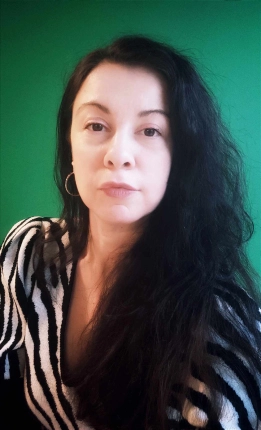
Anna Niarakis
Professor of Bioinformatics and Quantitative Biology
Head of the Master's programme in Bioinformatics and Systems Biology
University of Toulouse III - Paul Sabatier
https://cbi-toulouse.fr/en/membre/niarakis-anna-2/
Leader of the International Working Group “Building Immune Digital Twins”, supported by the Research Data Alliance Europe
The presentation will focus on developing mechanistic and hybrid digital twins to study immune-mediated complex diseases, with a focus on rheumatoid arthritis, atopic dermatitis, and Sjögren’s syndrome. I will discuss how multi-omics data—including single-cell and spatial transcriptomics—can be integrated with prior biological knowledge to build executable, multiscale models that combine Boolean networks and agent-based modelling. The construction of digital twins for complex inflammatory and autoimmune diseases requires computational frameworks that integrate molecular regulation, cellular decision-making, and tissue-level dynamics. In this context, agent-based models (ABMs) offer a natural representation of spatially resolved immune cell interactions, whereas Boolean network models provide scalable and mechanistically grounded descriptions of intracellular signalling and cell fate control. Building on recent applications of logic-based models embedded within multiscale simulations of viral infection and immune response, I propose a generic and formal framework for coupling Boolean models with ABMs. The proposed framework is motivated by applications to immune- mediated diseases, in which qualitative regulatory logic governs phenotypic transitions, including activation, differentiation, apoptosis, and cytokine production. By explicitly defining coupling maps, time-scale separation, and scheduling semantics, the framework enables the systematic integration of intracellular Boolean dynamics within heterogeneous agent populations. This approach supports modular model reuse, accommodates multiscale feedback between molecular and tissue levels, and provides a principled alternative to classical ODE-based intracellular descriptions. As such, it constitutes a foundational building block for hybrid immune digital twins that combine mechanistic knowledge, spatial dynamics, and patient-specific data. The goal is to bridge data-driven and mechanistic modelling to support precision immunology and advance the concept of human immune digital twins.

Miguel Rocha
Professor of Bioinformatics
University of Minho
https://www.ceb.uminho.pt/People/Details/19c61a9c-8d3f-4880-bbf6-8e31dc3f3fc1
In this lecture, I will perform a walk through a number of distinct computational tools for constraint-based modeling (CBM) developed in our group, that encompass genome annotation, model reconstruction and validation, phenotype prediction, strain optimization, and integration of omics data with models, including merlin, OptFlux, MewPy, Troppo, COBAMP, and others. I will also address the recent integration of Artificial Intelligence-based tools, based on Large Language Models (LLMs), for the improved explainability of CBM models and their simulations, integrating with LLMs and semantically enabled knowledge-graphs. I will go through different applications of those methods and tools, ranging from metabolic engineering to human health (cancer, neurodegenerative and infectious diseases), and plant sciences, using metabolic models of organisms as diverse as bacteria, fungi, algae, woody plants, fish and humans, many developed with our collaboration.